Why Vic Fangio is a defensive genius

When thinking of the best defensive minds in football, most will say Bill Belichick or Wade Phillips. Recently, Ravens’ defensive coordinator Don “Wink” Martindale has put himself into the conversation due to the ravens top defense under his watch over the last two years. One guy that many forgot about is Vic Fangio. He made a name for himself as the defensive coordinator for the 49ers when they were really good, and then taking his talents to the Bears. His strong showing with the Bears allowed him to get a head coaching job in Denver at the age of 60. He had to wait a long time, but the head coaching title is well deserved.

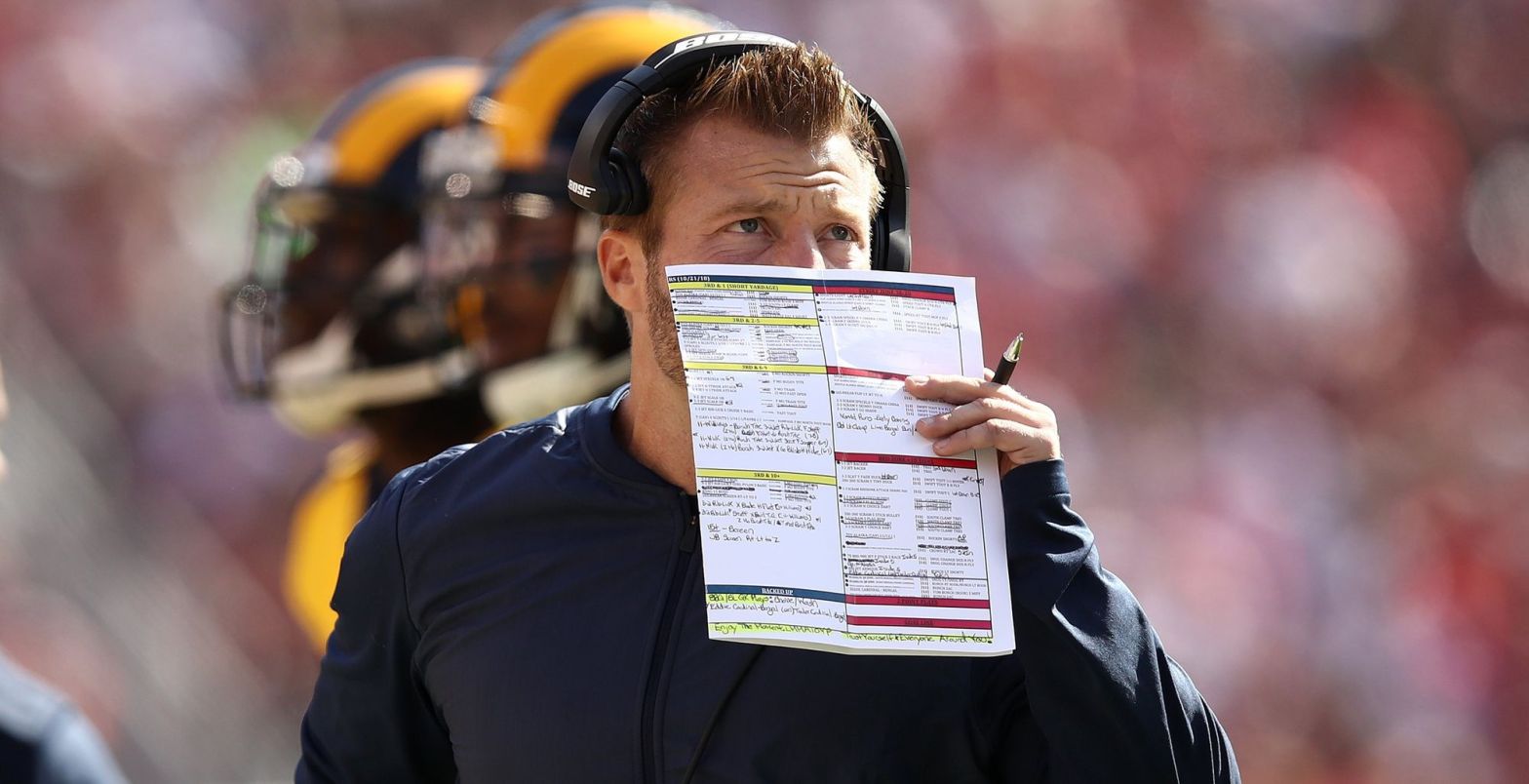
When three of the best offensive minds in the game name Fangio as the toughest to coach against that means a lot and speaks to how smart Fangio is. Fangio has given McVay, as well as many really good offensive teams, problems over the years. So why is Fangio so hard to play against?

The basics to understanding Fangio’s scheme is how he stay multiple while keeping it simple for his defense. Most of the time, Fangio will play with 2 high safeties. He will play a myriad of coverages from that look, but the safeties will not show their true intentions until after the ball is snapped, putting pressure on the quarterback to decipher the coverage.

Fangio will be multiple in his use of different fronts, creating the best matchups for his front 7. He primarily uses nickel personnel, with 2 linebackers in the box almost every play. Every defense Fangio runs is strong at linebacker and have multiple pass rushers who can get to the quarterback, lessening the need to blitz often.

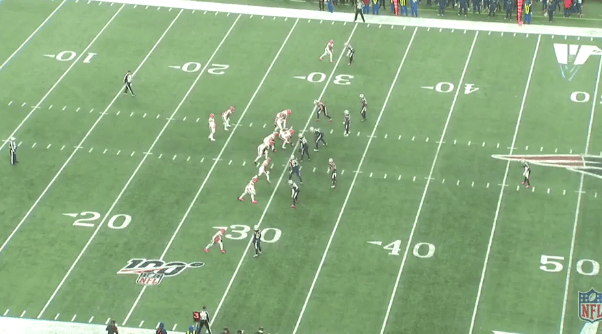
An example of him blurring his coverages was in 2018 vs the Buffalo Bills. On third and 12, Fangio shows man coverage. He as two safeties Depp, but with one lower than the other, suggests it will be a Cover 1 rover type of coverage.
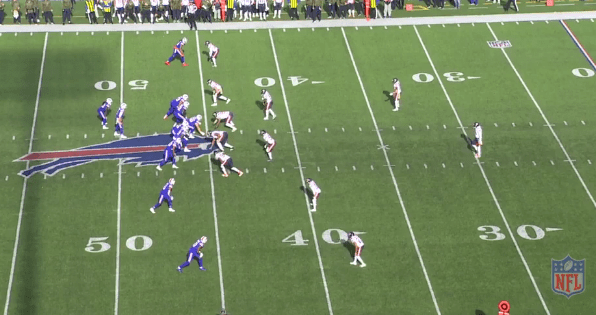
2018 Bears @ Bills Week 9 ©NFL GamePass

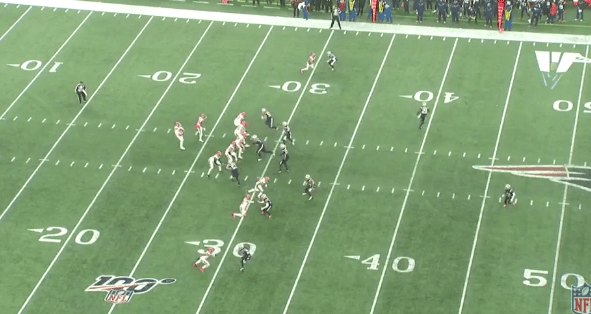
After the snap, the Bears play a type of zone coverage that most will call 3 buzz weak. The backside safety will play any vertical route from the #3 receiver. The backside corner locks the single receiver. The Bears play Cover 3 to the field, with the nickel dropping to the curl flat and the mike playing the hook-curl area.
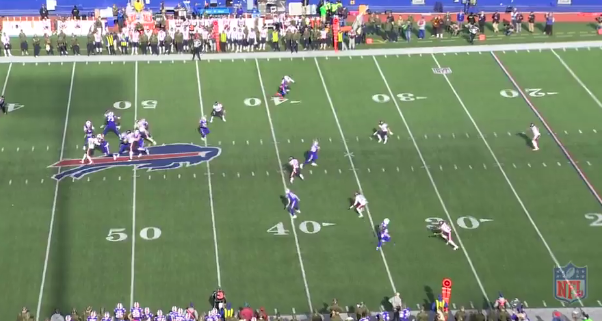
2018 Bears @ Bills Week 9 ©NFL GamePass

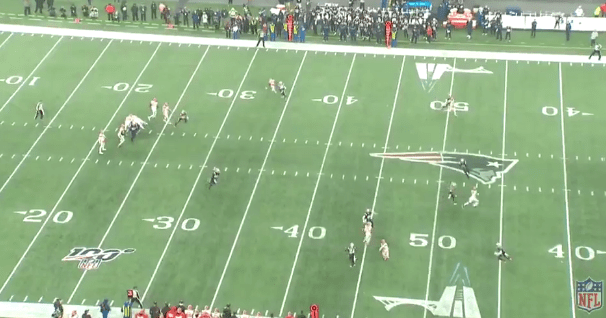
Another play from the Bills game comes on a 2nd and 9. This is a great example of how the d-line works in tandem with the linebackers in a Fangio defense. The d-line spills the run, and LB Roquan Smith uses his sideline to sideline speed to run the play down. Smith was able to chase down the running back because he was kept clean by his d-linemen. In Fangio’s scheme, he relies on defensive lineman occupying block to allow his linebackers to fill gaps quickly before double teaming lineman can get their hands on them.

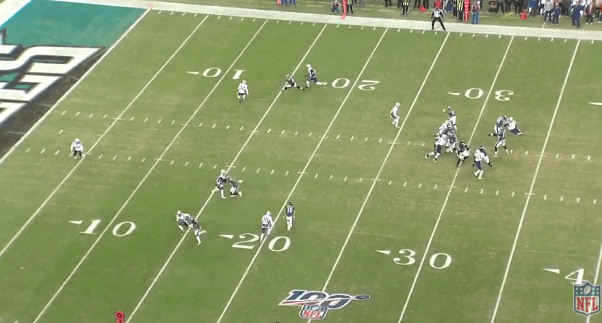
Last year in his first year with Denver, Fangio continued to stifle some of the best offenses around the league. In week 5 vs future hall of fame quarterback Phillip Rivers, Fangio left Rivers confused and without answers. On an early 3rd and long, Fangio messes with Rivers, deploying 3 safeties deep. He winds up rushing three and playing 2 man, with a safety robbing the middle of the field. This coverage takes away anything underneath, over the middle and deep. Meaning Rivers has nowhere to throw.

2019 Broncos @ Chargers Week 5 ©NFL GamePass

Late in the same game, Fangio brings what looks like an all out blitz, but winds up dropping three of those blitzers into underneath zones. He shows 2 safeties deep at the snap, adding more to the confusion. Rivers first has to make sure he gets the protection right and then after the snap try to figure out what coverage the Broncos are in. This is a tall task even for a quarterback with the experience that Rivers has.
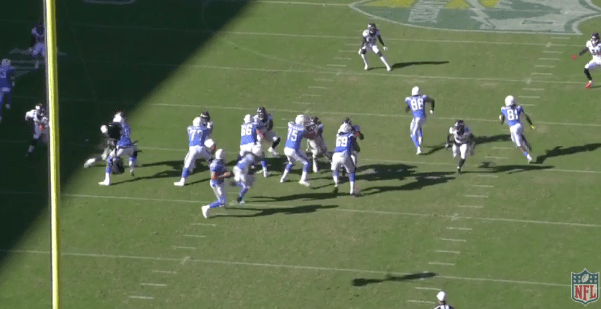
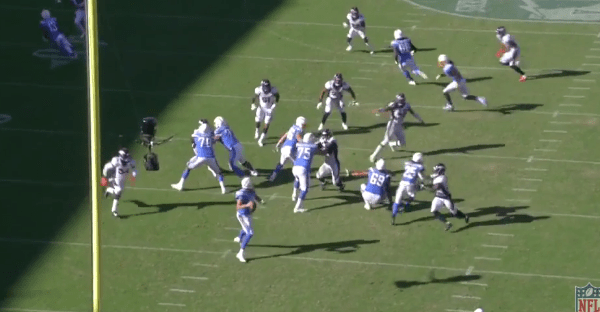
2019 Broncos @ Chargers Week 5 ©NFL GamePass

As you can see in the second picture, the Broncos drop defenders into the shallow zone area, and still get a free rusher screaming off River’s blind side. All Rivers can do is flip it to Gordon for a short gain.

Fangio’s defense always keeps offenses off balance with his multiple coverages. You never know what is coming until after the snap. Making he quarterback hold the ball for an extra second is all Fangio needs for his pass rush to get to the quarterback. His 2018 Bears defense was #1 in football because he had an elite pass rusher in Khalil Mack who feasted on quarterbacks, thanks to Fangio’s blurry coverages.
Third down fronts to create pressure

The Patriots defensive scheme is a master at creating pressure without blitzing. No, I am not talking about simulated pressure, as I have talked about in previous posts. An effective pass rush plan doesn’t always mean sacks. Sometimes it can be a balanced rush that keeps the quarterback in the pocket and prevents him from extending plays.

The Belichick scheme loves using an odd front on third down, and walking up two linebackers as potential blitzers. This will create a 5 on 5 against the offensive line. With Belichick playing man coverage on most third downs, there is a potential for added rushers if the running back or tight end stays in to pass protect. A linebacker and a safety, the two defenders covering the back and tight end, will blitz if their man stays in the help in the protection.

The way this scheme gets pressure is by using games up front. There are different types of stunts and twists that confuse offensive lineman, and get pressure on the quarterback. Sometimes, Belichick will use stunts simply to contain a mobile quarterback, such as Pat Mahomes or Deshaun Watson.

Belichick and his former assistants, such as Brian Flores and Matt Patricia, like to play man coverage and have at least one safety free to play the deep middle or be a robber in the middle of the field. Let’s do the math. If there are 5 receivers, you need 5 defenders to cover them, plus a safety helping. So that is 6 defenders at minimum. Belichick uses those 5 defenders to rush the quarterback. Sometimes he will only rush 3, when he wants to double two receivers, and still have a safety over the top. That makes 8 defenders in coverage. When you run this type of defense, you have to use the few rushers you have available efficiently.

In 2019, Belichick had a superior secondary, maybe the best he’s ever had in his two decades with the patriots. He had an elite cover corner in Stephon Gilmore. They also had 3 corners who are starting caliber corners in the NFL. Not to mention a safety in Devin McCourty who is incredibly smart, as well as another safety in Pat Chung who can cover tight ends 1 on 1. A great secondary made Belichick comfortable bringing 0 pressures, without a safety deep. He trusted his secondary to win 1 on 1, so he was able to blitz 6 or 7 and make the quarterback get rid of the ball immediately.

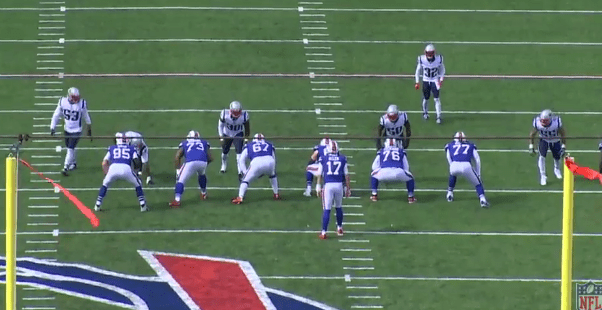
The first example comes from week 4 vs the Bills. The Patriots line up with 5 defenders across the line of scrimmage, with only 1 down lineman.

2019 Patriots @ Bills Week 4 © NFL GamePass

The Patriots are facing a quarterback in Josh Allen that is extremely dangerous when he is able to escape. He possesses incredible arm strength that allows him to make throws to any part of the field. Allen is also one of the fastest quarterbacks in the NFL and can make people miss in space. Allen is not very accurate and can’t beat a good defense by making throws from the pocket. That is why Belichick placed an emphasis on containing Allen because it was the key to victory, albeit a narrow one 17-16.

2019 Patriots @ Bills Week 4 © NFL GamePass

The stunt by #55 John Simon and #58 Jamie Collins works perfectly to contain Allen. On third down and 9, Allen is trying to make a play. When he sees the outside rusher Simon go inside, he immediately looks to escape the pocket to his right. Collins, initially lined up over the b gap, rushes to contain outside and surprises Allen. Allen tries to evade him, and tries to buy more time. He eventually runs out of timed Collins catches up to him for the sack.

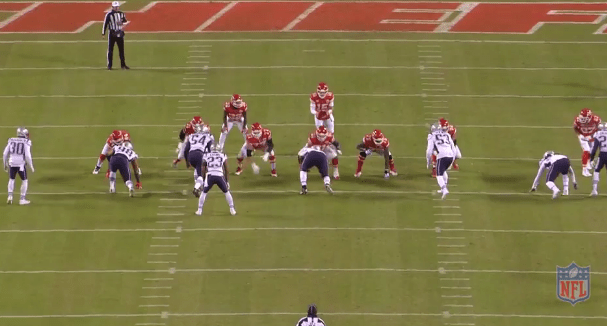
Going back to the 2018 championship game against the Chiefs, the Patriots used a lot of the odd front with two linebackers mugged over the B gaps. They wanted to create 1 on 1s with the chiefs 5 offensive lineman, who struggle when isolated.

2018 Patriots @ Chiefs ©NFL GamePass

The Chiefs will make a 50 call up front, which means that their 5 o-lineman will be responsible for the patriots’ 5 across. The nose stunts to the right A gap and #54 Hightower will stunt to the left A gap. Butler occupies the center, while Hightower will get the Right guard to block him. Van Not will then loop around to the opposite B gap and come through unblocked. By lopping Van Noy 4 gaps over, there is no way the Chiefs can block him, other than with a running back. The running back releases because he was responsible for #23 Chung in pass pro and Chung did not blitz.

2018 Patriots @ Chiefs ©NFL GamePass

The Patriots scheme not only shows how defenses can get pressure on a quarterback, but also contain him. While they relied more on straight up cover 0 blitzes in 2019, the odd front with games package for the Patriots has been successful for years.

Patriots scheme: 3rd down coverages

The Patriots and Bill Belichick may not always have the league’s best defense in terms of yards, but they are always among the best in scoring defense. Their ability to limit points has always complimented their high scoring offense. The Patriots defense is always strong on 3rd down and in the red area. The Patriots as a team are always well prepared when it comes to situational football.

The Patriots, as well as the Lions who are coached by former Patriots defensive coordinator Matt Patricia, run a lot of man coverage on third downs. Belichick’s defense prefers subtle variance in his fronts and coverages, rather than full on chaos. The first example of this comes from last season against the Browns in Week 8. The Patriots show a man coverage look with a safety in the middle of the field. To the browns, it is clearly cover 1.

Browns @ Patriots Week 8 ©NFL GamePass

At the snap the Patriots rotate the boundary safety to a deep half, playing 2 man, or as Belichick calls it Cover 5.

Browns @ Patriots Week 8 ©NFL GamePass

A good way to beat 2 man is to run the slot receiver on an out pattern, since the corners play with inside leverage, due to having help outside and over top. The corner at the bottom of the screen, Stephon Gilmore, comes off of his man and undercuts the out route. It should’ve been a pick 6, but Gilmore couldn’t squeeze it. The Patriots have a check in this coverage that allows the outside corner, Gilmore, to trap an out route by #2. He is protected with safety help over the top. The Browns played right into Belichick’s hands.

The Patriots are known for taking away the opponent’s strength, which is usually a stud receiver. Against the Eagles in Week 10, they faced star tight end Zach Ertz. On third down, the Patriots ran their staple 1 Double Jersey # coverage. No matter where Ertz lines up, the Patriots will double him. Here he is flexed out as the single receiver in a 3×1 open set.

Patriots @ Eagles Week 11 ©NFL GamePass

At the top of the screen, Ertz runs a dig route. The safety plays high and inside, with the corner playing low and outside on Ertz. The Patriots use their other safety to play over the top of the 3 receiver side, helping on any deep routes. This also allows the patriots underneath defenders to play aggressive man coverage, because they know they have help over the top.

Now let’s take a look at a lions example. When you play man coverage on third down, one popular way to attack it is to run crossing routes, in attempt to have receivers run away from the defender trying to cover them. The Lions/Patriots answer is to run 1 Cross, which is a coverage that uses a safety to drop down and cut the first crosser he sees. Usually it will be the boundary safety, because the routes will be coming from the field.

To take it a step further, teams know that this defensive scheme runs this coverage on third down, so they will run another receiver on a crossing route. Since the defender’s job is to cut the first crosser, the offense wants another crossing route ran against this coverage, because the patriots defender covering it will not have any help. The coverage’s answer to this? The defender covering the first crosser initially, will now become the new robber, or defender ready to cut a crossing route. it is a type of switch coverage that is aimed to bait teams into throwing a second crossing route, right into a lurking defender.

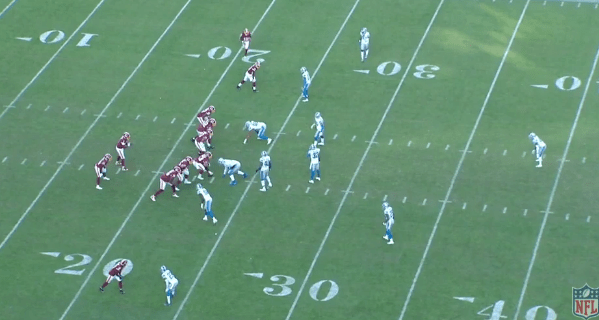
In studying the Lions 3rd down defense from 2019, they played a mix of Cover 1 and Cover 2. When they played Cover 2, they disguised it, waiting until after the snap to rotate. They ran a mixture of sim pressures, which I covered in previous posts. Against the Redskins in week 13, here is a great example of a cover 2 sim pressure. The Redskins motion and outside receiver in closer to the formation, trying to see if the lions are in man coverage.

Lions @ Redskins Week 12 ©NFL GamePass

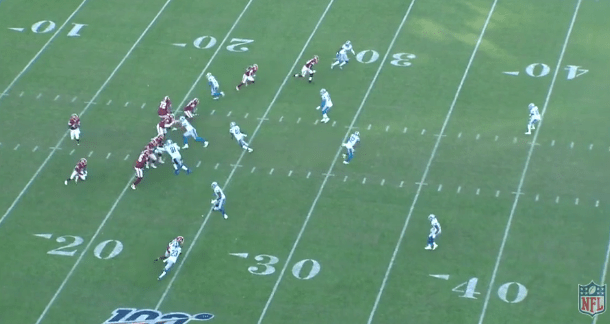
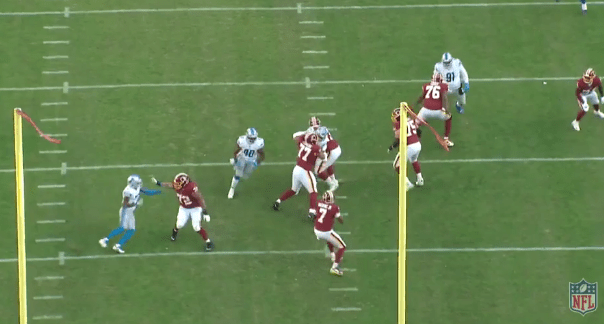
The Lions rotate to Cover 2 Tampa, bringing the nickel and the mike linebacker. The safety sprinting to the middle of the field, is what makes this 2 Tampa and not just simply cover 2. The Mike comes unblocked up the middle for the sack. A successful sim pressure is when you have an unblocked defender and offensive lineman standing there blocking air. That is exactly what happened here.

Lions @ Redskins Week 12 ©NFL GamePass

I noticed in my study that the Lions ran sim pressures more often against young quarterbacks. Patricia wanted to confuse them and make them stand there and hold the ball or force them into bad decisions.

The Patriots defense works when you have a really strong secondary and are able to execute a rush plan tailored to each opposing quarterback. The Patriots excel at this, but the lions did not in 2019. The were not able to get to the quarterback rushing only 3 or 4, and suffered injuries in the secondary. Taking away what your opponent does best sounds cliche, but using 1 Cross or 1 Double jersey # will allow your defense to do just that.

49ers Run Game Analysis

The San Francisco 49ers went from 4 wins in 2018 to a Super Bowl appearance in 2019. This type of turnaround is extremely rare in the NFL. The 49ers dominated teams all year with their run game. What was unique about the 49ers rushing attack was the fact that they ran the ball predominantly out of 21 personnel, 2 backs and 1 tight end. What made them so great was that their 21 personnel wasn’t your typical 21 personnel.

The 49ers had a trio of running backs that ran a 4.40 40 yard dash. Their fullback, Kyle Juszczyk, is as versatile a player as there is in the NFL. He excels at blocking but also can be flexed out as a receiver and pass protect. Their tight end, George Kittle is a unicorn. He is the best blocking tight end in football, but also one of the best receiving tight ends in the game. He runs like a wide receiver and catches like one too. Even Rob Gronkowski does not have as many tools as Kittle does. Finally, their 2 receivers are pretty good too. Deebo Samuel is another versatile weapon, who can be used as a running back or as an outside or slot receiver. The second receiver was split between two guys. One, Emmanuel Sanders has had a very long career producing. They also have Kendrick Bourne, a bigger receiver who can also block in space.

The 49ers come from the same school of the Rams and the wide zone, which I broke down in an earlier post. What makes them different from the Rams is they incorporate a lot of gap scheme runs, with pulling guards and tight ends. They also utilize a variety of reverses, running back screens and tight end screens.

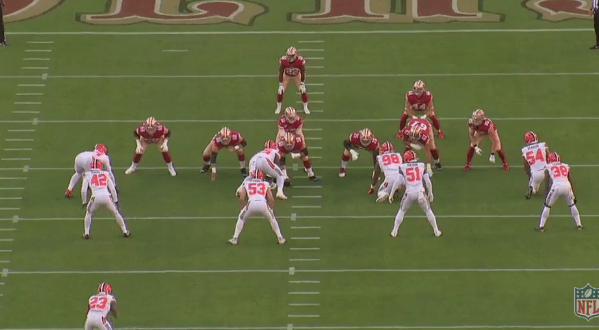
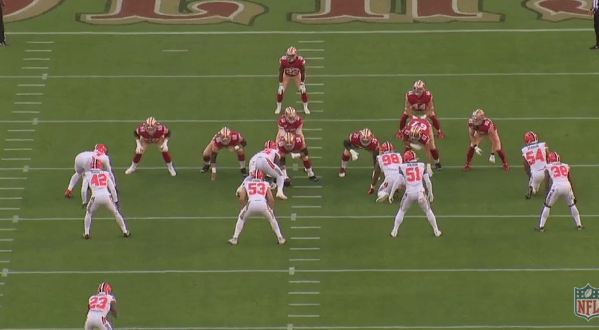
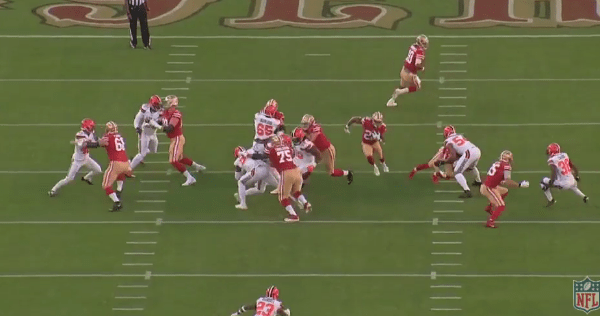
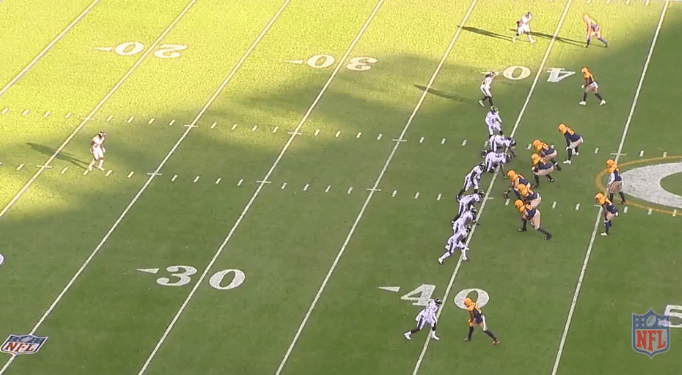
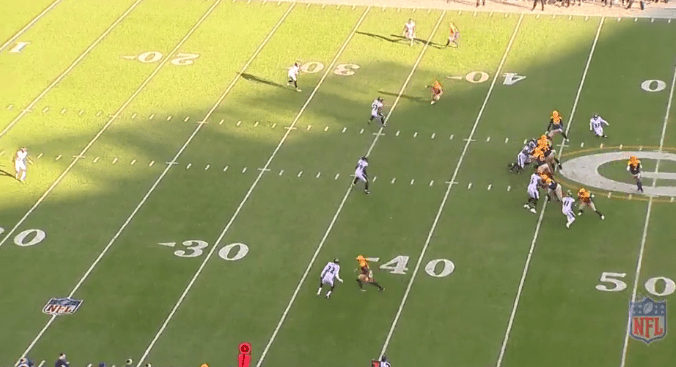
First, lets take a look at wide zone. What makes the 49ers run game so hard to stop is the addition of a fullback to their blocking scheme. Very few teams use a fullback, and nobody as much as the 49ers. Below is a clip from Week 5 vs the Browns which goes for an 83 yard TD. The clip is a split zone run that cuts back.

Browns @ 49ers Week 5 © NFL GamePass

The Browns line up in a 4-3 over front. From left to right, here is how they will block it. The Right tackle will reach the defensive end, lined up in an outside shade. The center and right guard will double the shade up to the plus LB, #53. The left guard and left tackle will double the 3 tech up to the minus LB, #51. The Tight end Kittle will sift up to the safety #38.

The 49ers leave the end unblock initially, until the fullback comes across to kick him out. This leaves a huge cutback lane for Breida, who uses his track speed to take it to the house. A big part of this play was to motion the fullback from his initial alignment in the weak I-formation to the strong I-formation. This forced the linebackers to move over a gap, which created more space for the cutback.

Browns @ 49ers Week 5 © NFL GamePass

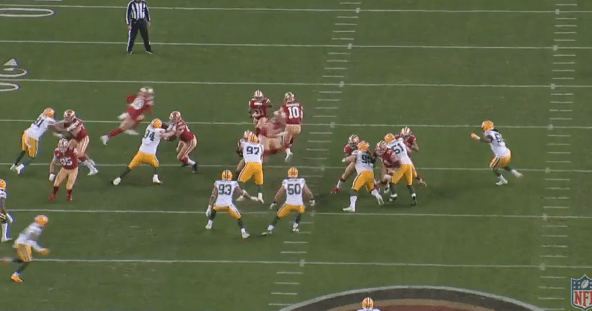
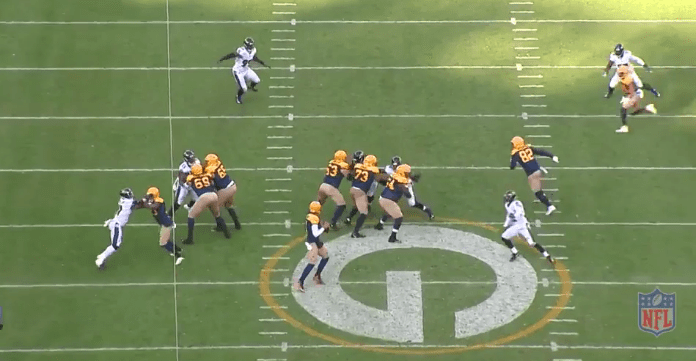
The next clip comes from the NFC Championship Game against the Packers. This play will look exactly the same as the play above, but this time the 49ers hand it off to Deebo Samuel on the end around.

Packers @ 49ers NFC Championship Game © NFL GamePass

The 49ers do an excellent job of making their plays look the same. Coach Kyle Shanahan, K-Shan as I like to call him, loves to use the same formation and motion one time, and then use it again but run a different play, as shown here with the 2 plays I broke down.

Is Sam Darnold a Franchise QB?

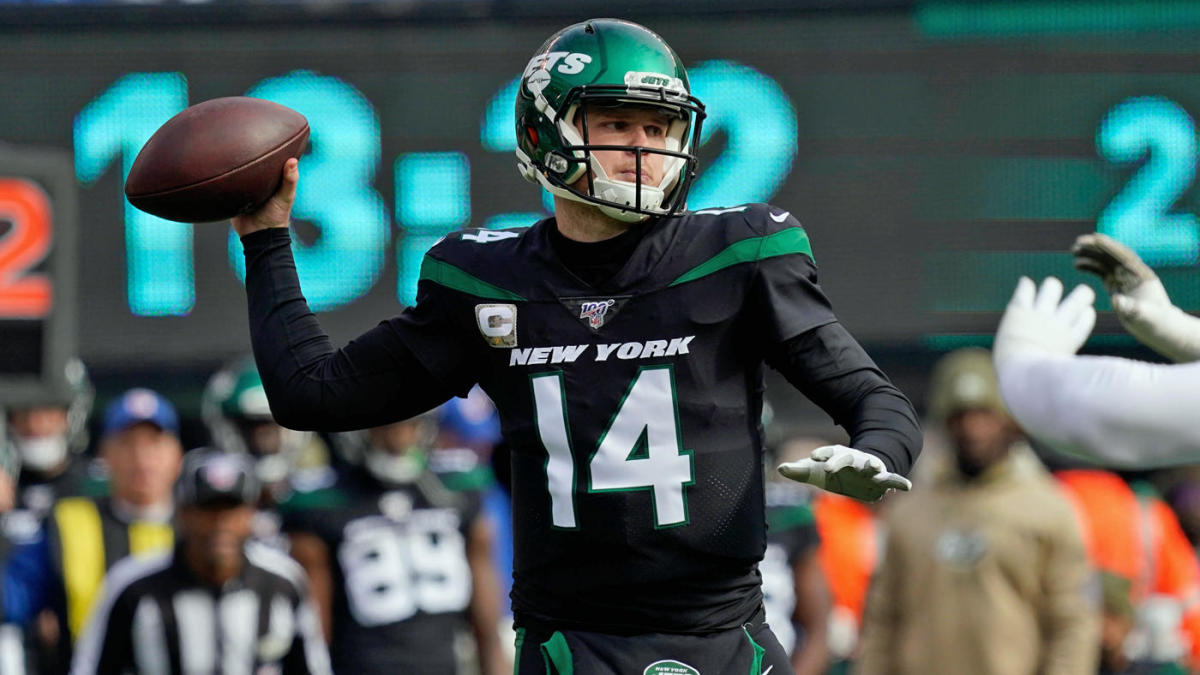
The New York Jets fan base has suffered through many losing seasons and embarrassing moments. While the last few seasons have been no different, they finally think they have something they haven’t had since Joe Namath, a franchise quarterback. Sam Darnold is going into his third season. His second season, in 2019, was much better than the first statistically.

Darnold is not your typical quarterback. He is not a natural pocket passer, which exceptional arm strength and perfect mechanics. Though he does have his traits that made him the 3rd overall selection in the 2018 NFL Draft. Darnold is best when the play breaks down. He is able to make plays off schedule by extending the play and making throws from different arm angles. He has a talented arm, which sometimes forces him to throw with just his arm, resulting in some bad mechanical habits. He is mobile enough to get out of the pocket or scramble when he needs to. The next progression for Darnold, or most quarterbacks, is for him to be able to read defenses after the snap and limit turnovers. These two skills go hand in hand, because the more you understand defenses they better you will be able to know where the ball needs to go and make fewer mistakes.

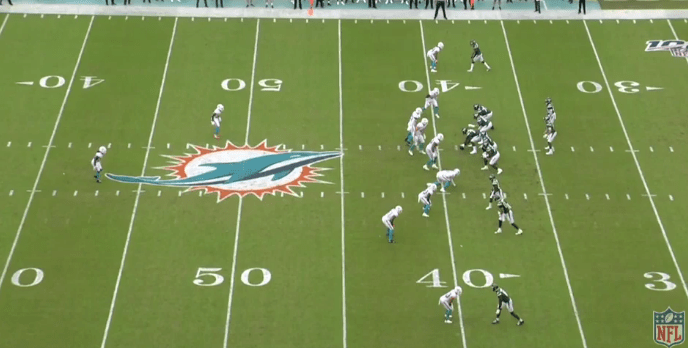
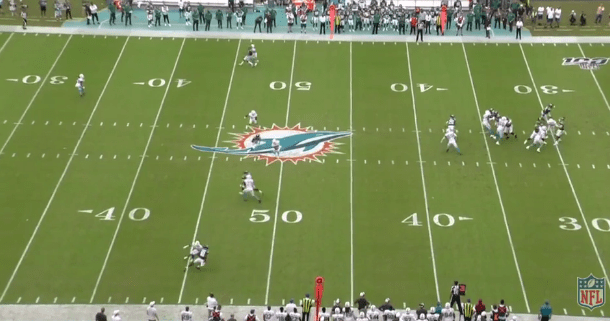
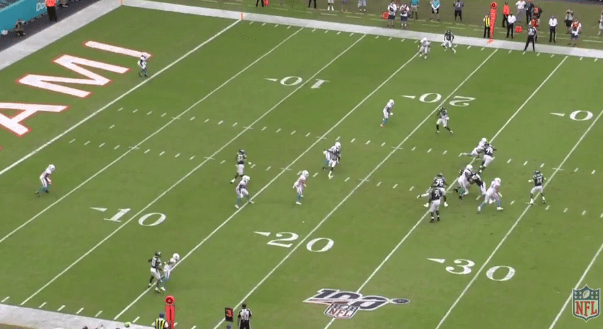
The first game analyzed will be a loss against he Miami Dolphins in Week 9. On 3rd and 8 in the first quarter, the Jets line up in a 3 receiver set, with slot receiver Jamison Crowder as the #3 receiver. The Dolphins are showing a cover 1 look before the snap, with a safety dropping down to rob the first crosser that comes his way.

2019 Jets @ Dolphins Week 9 © NFL GamePass

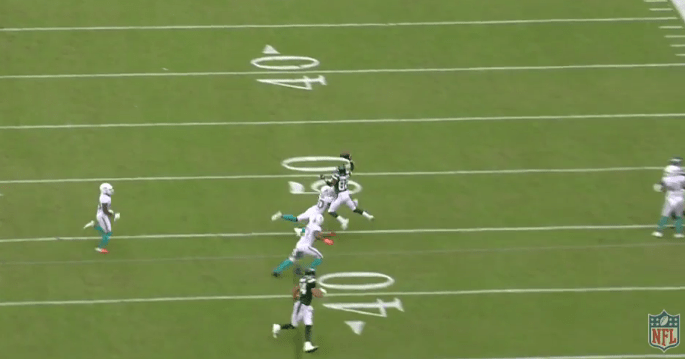
Coach Adam Game dials up a deep speed out by Crowder. Since it is a long developing route, Darnold needs to buy time to throw it. With the #2 receiver running vertical, there will be open space for Crowder to win 1 on 1. Darnold releases the ball of his back foot, sliding away from the pocket. Crowder makes a ridiculous one handed catch for a 20 yard conversion.

2019 Jets @ Dolphins Week 9 © NFL GamePass

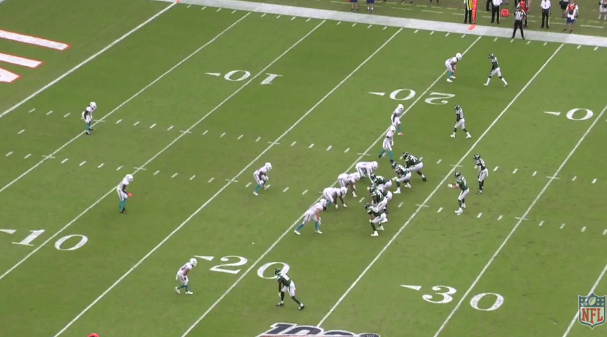
The second play happens later on this drive. It is 3rd and 3 from the dolphins 22. On 3rd and short, you are almost guaranteed to see man coverage. Instead, the dolphins rotate to a drop 8 Cover 2.

2019 Jets @ Dolphins Week 9 © NFL GamePass

Darnold’s first read is Demariyus Thomas at the bottom of the screen running a hitch. He gets jammed up by the hard corner, and Darnold doesn’t see tight end Ryan Griffin wide open running a seam route, into the void in the middle of the field. It should be noted that Gase dialed up a quarterback friendly play. He has hitch-seam to the bottom of the screen, a single high beater, and then spacing to the top, a zone beater. Darnold reads 1 high pre-snap and chooses the hitch-seam side. The disguise by Miami freezes Darnold, and he takes a sack. The Jets go from makable field goal range to attempting a 49 yard field goal, which naturally Sam Ficken misses. As a young quarterback, Darnold needs to understand situational football if he is going to the next step in his development.

Later in the first half, the Jets are at the 2 yard line with 54 seconds left. The Jets have all 3 timeouts and it is 2nd and goal. Gase dials up a sprint pass designed to hit Crowder in the flat, with the #1 and #2 receivers blocking. The dolphins play it perfect, and Crowder falls down. Darnold backs up and is under pressure. Instead of throwing it away or at worst taking a sack, he carelessly throws it up. One of the worst decisions you’ll ever see by a quarterback.

https://vimeo.com/393158878

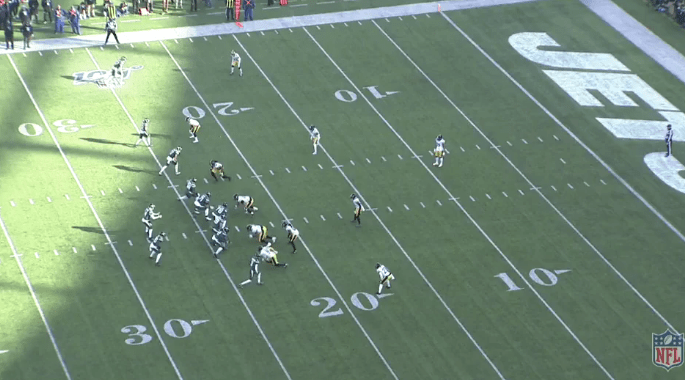
Moving on to week 16 against the Steelers. In the first quarter, Darnold shows why he shook be considered a franchise quarterback. What he does here is something that you might see Brady or Brees do on any given Sunday. The Steelers are playing a single high coverage, with the Free Safety in the middle of the field. The Jets align Anderson by himself to the bottom of the screen, in a condensed split. This split is crucial to the play, because it forces the corner to widen and play outside of Anderson.

2019 Steelers @ Jets 2019 Week 16

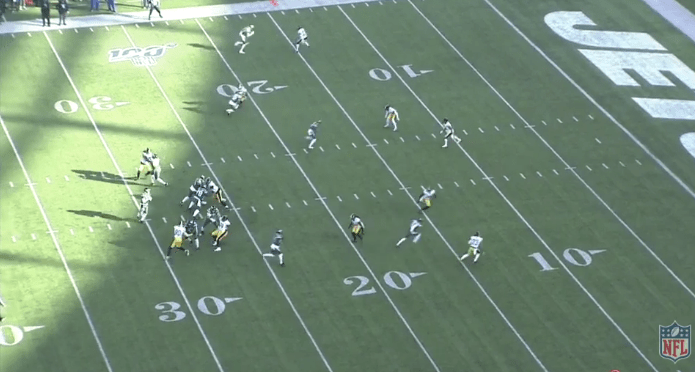
In the second image, here comes the mastery. Darnold holds the free safety with his eyes, forcing him to jump the curl route by the #3 receiver. Darnold knows the entire time that he is going to throw the go route to Anderson. He is doubled by the safety and Haden, but Darnold puts the ball out in front of Anderson and throws it high where only he can get it. Just an all around outstanding play by Darnold.

2019 Steelers @ Jets 2019 Week 16

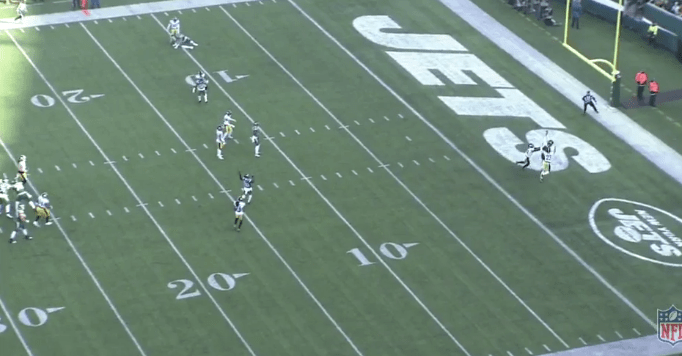
Later in the first quarter, Gase dials up a play action shot play for Darnold, against the Steelers base Cover 3.

2019 Steelers @ Jets 2019 Week 16 © NFL GamePass

Anderson runs a dig, which is jumped by the free safety. In Cover 3, when defending post-cross/dig, the free safety will jump the dig route, and the corner will replace him as the middle of the field player. Darnold doesn’t see this, and throws the deep post anyway. He is lucky it isn’t intercepted, as Vyncint Smith rips it out of Joe Haden’s hands.

While these are only 5 plays of Darnold’s season, they represent who Darnold is as a player at the moment. he shows flashes of greatness, but then follows that up with some bad mistakes. Sometimes it is protection, situations or reading coverages. Many will come to Darnold’s defense, saying that he has a bad offensive line, bad coaching and not enough weapons. I truly believe that if Darnold was coached by McVay or Kyle Shanahan, that he would thrive. The goal of a coach is to build a system around the strengths of the quarterback. It is too early to tell whether or not Gase’s system is a good fit for Darnold, but 2020 should answer the question. You can bet Joe Douglas will invest significant resources in offensive lineman and another weapon or two for Darnold. I think Darnold falls into the category of you can win with him but he needs a strong team around him to be effective. That is most quarterbacks in the NFL, so the Jets should continue to build around him and watch him continue his development as a franchise quarterback.
Patriots Trap Pass

My last post was about the Patriots’ empty pass concept called “Hoss Y Juke.” It has been a staple concept for them for over a decade, and is still used today. Similar to the last post, another staple concept for the Patriots is the trap pass. It is a concept, like Hoss y Juke, that they’ve run for a long time. It turns out that the trap pass was Tom Brady’s suggestion, after learning it from another all time great. Peyton Manning. Here is the video that discusses it on the NFL Top 100 of All-Time List that aired on NFL Network.

© YouTube

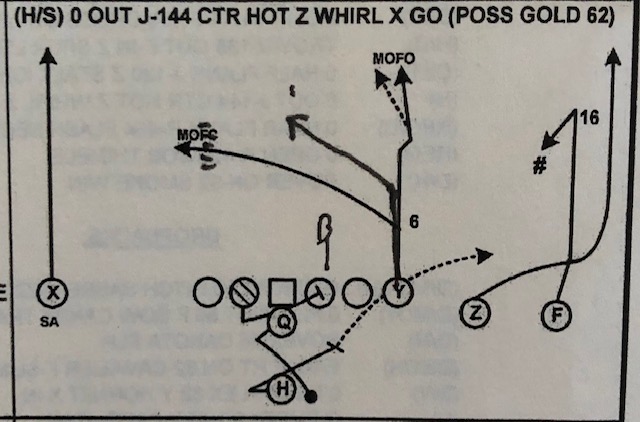
The concept is a play action pass, where the tight end will run across the field. The play action fake is quick, because the goal is to get the linebackers to step up for a split second, and get the ball to the tight end quickly, before the linebackers can get back into their zones. The Patriots will pull the backside guard on most occasions, but that can change based on the front the defense is playing. Here is a diagram of the play, from an old Patriots playbook.
Twitter @ZachSDunn

The Tight End (Y) has a 3 way go. His first read is if the coverage is middle of the field open (2 high) or middle of the field closed (1 high). If it is 1 high, he will run straight across the field, and depending on how effective the play fake is on the linebackers, that will tell the tight end when he should break inside. The tight end will almost always run a crosser because most teams will play 1 high vs this play. That is because the Patriots will usually run this out of heavy personnel, 21 or 12. This way it is even more of a tell to a defense that they are going to run the ball.

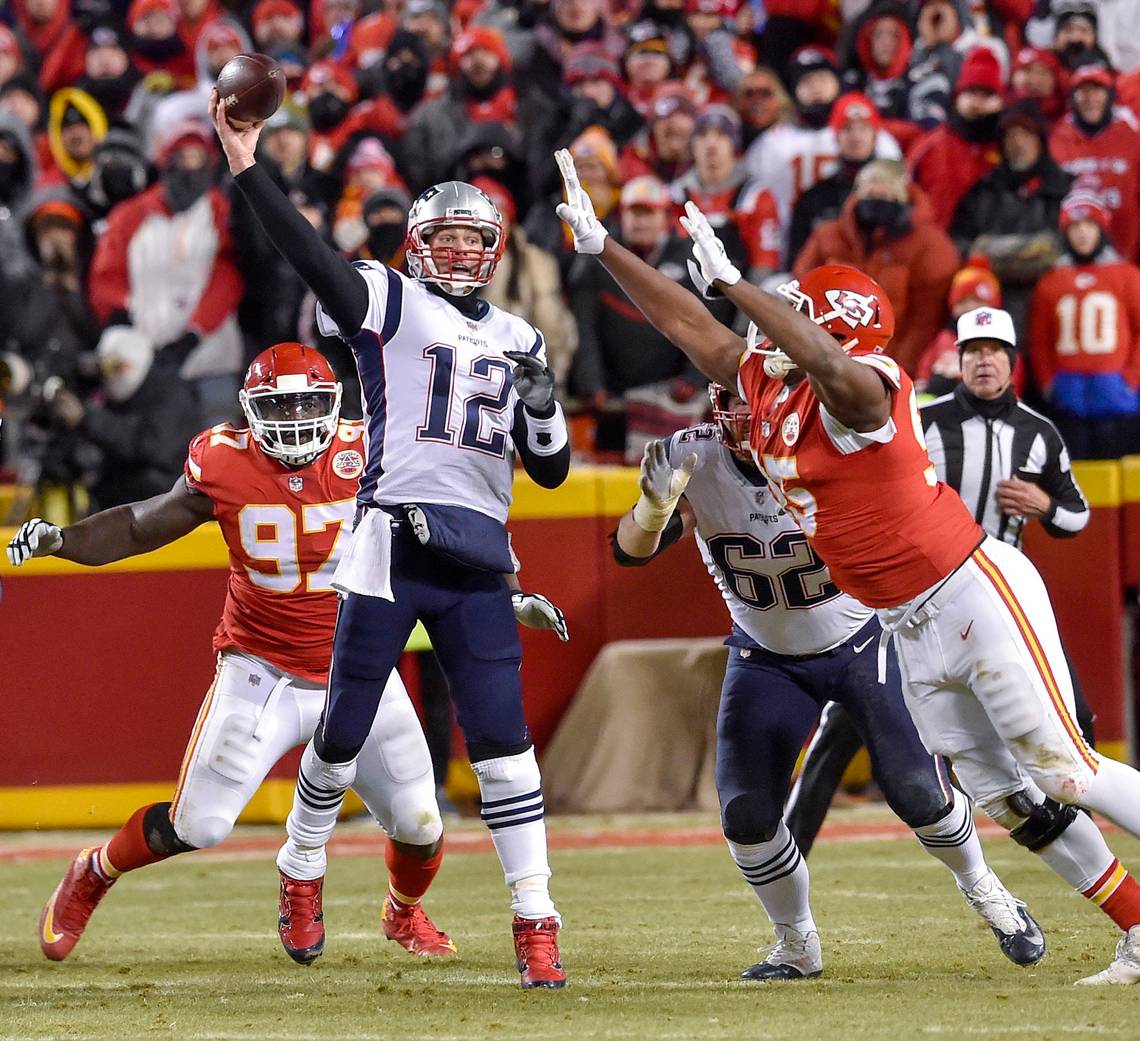
To back this up, let’s take a look at a few film examples. The first one is from the 2018 AFC Championship Game against the Chiefs. The Chiefs play 1 high, which means the tight end Gronkowski will be breaking his route off at about 6 yards and running across the field. The linebackers bite on the quick play fake, allowing Gronkowski to find an open window behind them.
2018 AFC Championship Game ©NFL GamePass

The other element to this play is the jet motion across from Corderrelle Patterson. The motion holds the linebackers to the frontside and creates traffic. Since the Chiefs are in man coverage, the slot corner has to run with the motion across the field.

From the tight angle, the Chiefs play an over front. The RT(#61) and RG (#69) will double team the 3 technique. Since the tight end is free releasing into his route. The backside guard (#72), will pull for the standup outside linebacker, playing a 9 technique outside of #87 Gronkowski. Not an easy block, but the motion forces him to hesitate, which is all Brady needs to get the ball off. Brady opens to his left and then sticks the ball out to his right. He quickly pulls the ball back and gets rid of it. There is no drop, just a quick fake handoff, then a pull and throw.

The Patriots have run this concept because it is works against almost any type of defense. It was especially effective to use off your run game when you run power. This play looks the same as power because the backside guard is pulling. The heavy formation is also another indication to the defense that its going to be a run, which adds to the deception of the play. There isn’t much risk of pressure because of how quick the play fake is by Brady. Overall, the Patriots have used some of the same concepts for years because they work and their players can execute them at a high level.

Patriots Empty Pass Game

The New England Patriots have won 6 Super Bowls under Bill Belichick and Tom Brady. There are many reasons why they’ve been successful, but one of them is keeping things simple for their players so they can play fast and execute at a high level. One of the things they do offensively is spread teams out with empty formations. The beauty of this is the patriots will do this when they have 21 or 12 personnel on the field. This means that the defense will have their base defense, or in other words, their bigger players on the field to try and stop the run. That is because when the Patriots have two backs or two tight ends on the field, the opposing defense is thinking they are going to run the ball.

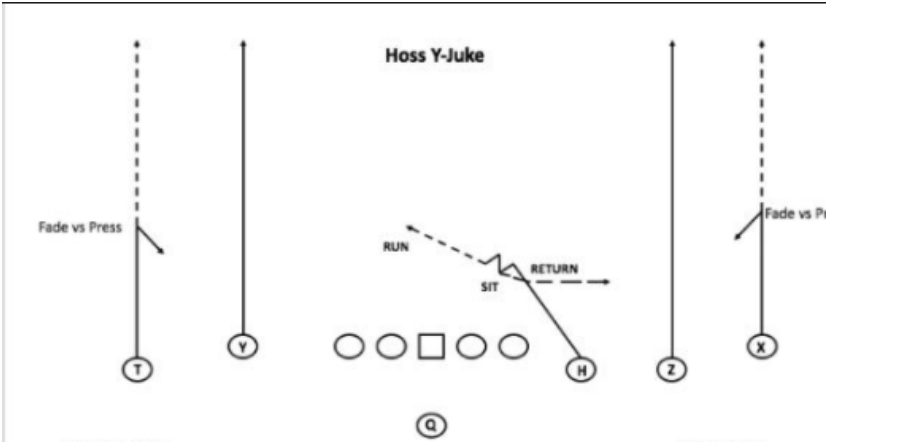
One of their favorite empty concepts is called hoss y juke. The hoss is a condensed word that means hitch by the #1 receiver and a seam rote by the #2 receiver. The Y, usually the TE, has a juke route which can actually be 3 different routes depending on the leverage of the defender they are running off of. Here is a diagram of the play.

© Riley Kolste Football

As you can see, the #3 receiver, called the H in this diagram, will run his route based on the defender, usually the mike linebacker. In general, he will sit if it is zone or run if it is man. To take it a step further, if the defense is playing zone coverage and the Mike is walling him inside, he will return back out. The outside receiver on both sides also have a rule. If the defender presses him, he will run a fade. If he plays off and gives them cushion, he will run a stop route at about 5 yards.

The Patriots will sometimes run this play multiple times a game. The play has answers against essentially every coverage. The Patriots also can go hurry up in a run formation with Brady under center, and then hurry to the line and spread them out in empty. Usually, the patriots will put their best receiver, Edelman, at the #3 because it will get him matched up on a Mike linebacker. They put their fullback or running back out wide. There are two reasons for doing this. One, if a linebacker goes out to cover the running back out wide at #1, the patriots know the defense is in man coverage. if they have a corner out there, it means the defense is in zone coverage. Linebackers that only play in the box are uncomfortable going out wide and playing where corners normally play.

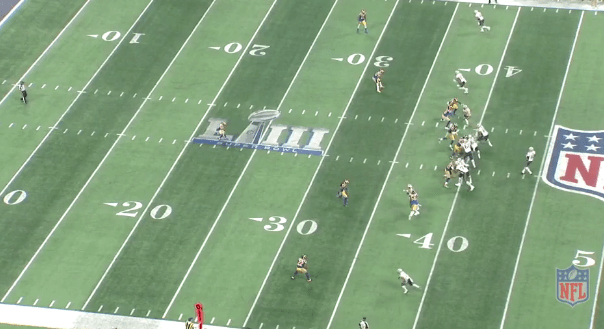
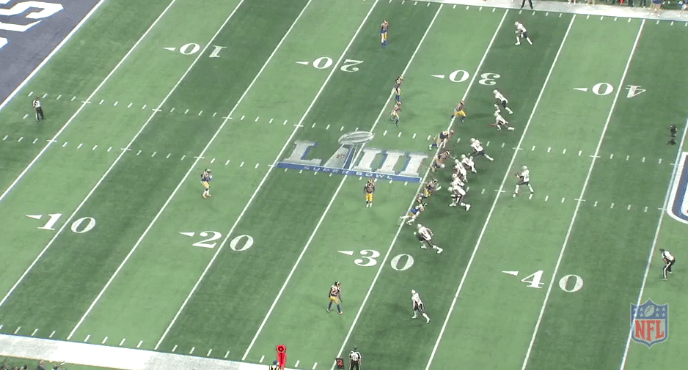
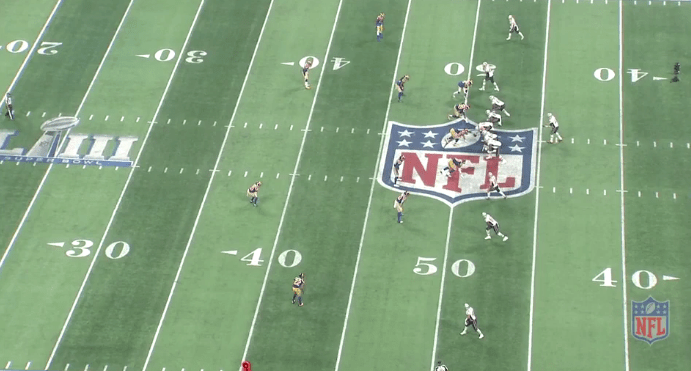
There are many examples of this play since the Patriots have run this play for decades, but the best example is from the Super Bowl last year against the Rams. With the game tied at 3-3 and neither team could do anything offensively, the patriots reverted to hoss y juke.

Super Bowl LIII © NFL GamePass

The Rams play a quarters coverage. The Patriots actually use 22 personnel, aligning their fullback and running back on the outside. Edelman will run his route off the mike linebacker, who has inside leverage at the snap. Edelman will return out, because of the defender’s leverage. Easy gain of 13 and a first down.

The next play, the Rams play a single high coverage. They know the Patriots are going to exploit the matchup again with Edelman on a linebacker. So they decide to double both Edelman and TE Rob Gronkowski in the slot to the bottom of the screen.

Super Bowl LIII © NFL GamePass

Against a single high defense, Brady will go to the hitch/seam combo. He sees the corner #22, at the bottom of the screen, play off with his eyes inside. With the corner playing off, Brady throws it out to the running back Burkhead for a gain of 7 yards.

On the third play, the Rams are late to get lined up, but again play a single high coverage. Brady does a great job holding the free safety in the middle of the field, by looking to his right, away from Gronkowski, in the left slot. The Safety is unable to influence the throw, and Brady throws a perfect touch pass, laying the ball out where only Gronk can get it. since the linebacker was late getting over, he was behind Gronk by a step, just enough space for the pass to be completed.

Super Bowl LIII © NFL GamePass

This series of 3 plays single handedly won the Super Bowl for the Patriots. Hoss Y Juke is a play the Patriots use for so many years because the players can execute it and it gives them an answer vs any defense. While many would say, “why can’t they stop it if they run the same play for years,” the patriots run the play out of different personnel groupings and move guys around. When used with tempo, the play becomes even more dangerous. The Patriots always seem to find advantages other teams can’t and this is just another example of their brilliance.

Simulated Pressures Part 2

In Part 1, I focused solely on simulated pressures with 2 deep coverage. Part 2 will focus on 3 deep sim pressures. As in Part 1, the Tennessee Titans and their brilliant defensive coordinator Dean Pees will be featured in this post. the other two teams will be the Houston Texans, who have ran a 2 deep and 3 deep sim pressures successfully for years.

What makes a sim pressure effective is when you are able to fool the offense twice. First, you show them a coverage they think you’re in but play a completely different coverage. This will force the quarterback to hold the ball or even force an interception. The other way is to break the offense’s protection scheme. What makes a sim pressure a sim pressure is when you show defenders blitzing on one side, then drop them into coverage and blitz a defender(s) from the other side. The offensive line must account for those potential blitzes, so when they don’t blitz that usually leaves offensive linemen blocking no one.

The first clip is from a Week 3 matchup this past season between the Texans and the Los Angeles Chargers. Sim pressures usually show up only on 3rd down, although some teams will run them on 1st or 2nd down. This situation happens to be 3rd down and 9. The Texans will overload the right side of the offensive line with 4 potential blitzers. They do this to get the Chargers to slide their protection that way, so they can walk up safety Jahleel Addae (#37) and blitz him through the B gap. The Texans draw this up so that Addae has a free run at the quarterback. They expect the running back to pick up #41. Unfortunately for the Texans, Chargers QB Phillip Rivers is a genius and knows exactly what’s coming. He sends the running back to pick up Addae. Rivers makes the correct read but the play results in an incomplete pass. while the teams got the result they wanted, they still were outsmarted by Rivers, who has made a career out of that.

2019 Texans @ Chargers © NFL GamePass

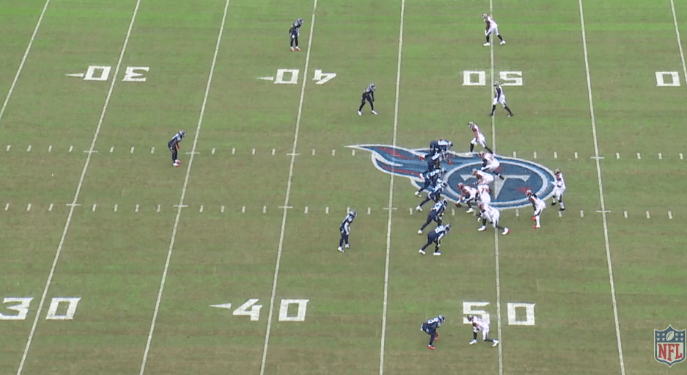
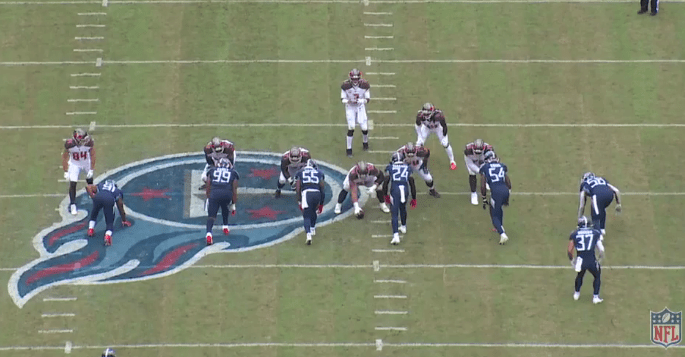
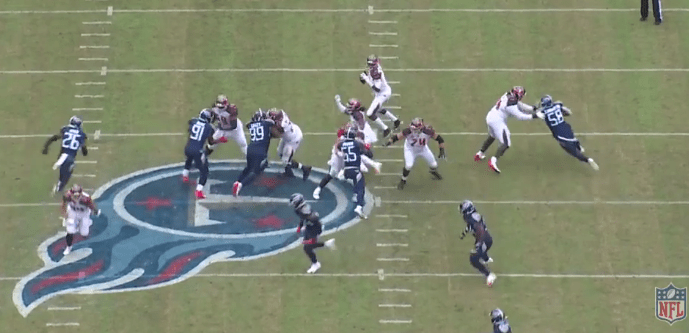
The second clip is from the Week 8 matchup between the Titans and Tampa Bay Buccaneers. The Titans are playing a 1 high safety look against the Bucs’ 3×1 formation. The Titans look like they are playing zone because there is no defender over the #3 receiver. On the tight angle, the titans walk up #24 and #55 into the A gaps. Usually when facing this look, the offense will designate the Center to block one of them and the running back to take the other.

2019 Buccaneers @ Titans Week 8 © NFL GamePass

Post-snap the Titans drop the middle of the field safety down to play the seam flat. They rotate the opposite safety from 5 yards off the line of scrimmage all the way to the deep middle. They blitz the nickel corner, Logan Ryan, to the field, who initially lined up over the #2 receiver.

The genius in that is there was no way the Bucs would account for him in protection because they assume he has to cover the #2 receiver. Also, he is 6 yards off the line of scrimmage. Due to the double A gap mug, the Bucs have nobody to block Ryan coming hot off the edge. The result is a sack and forced fumble.

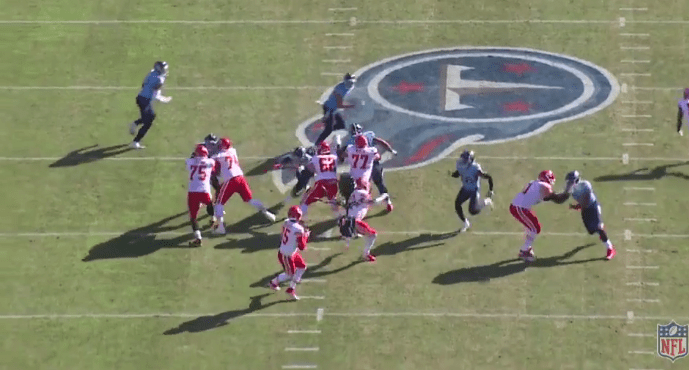
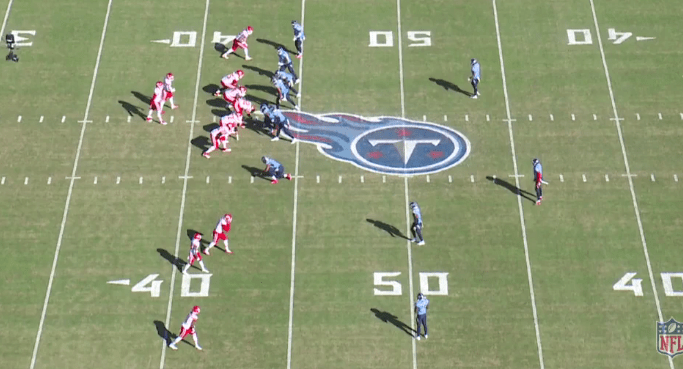
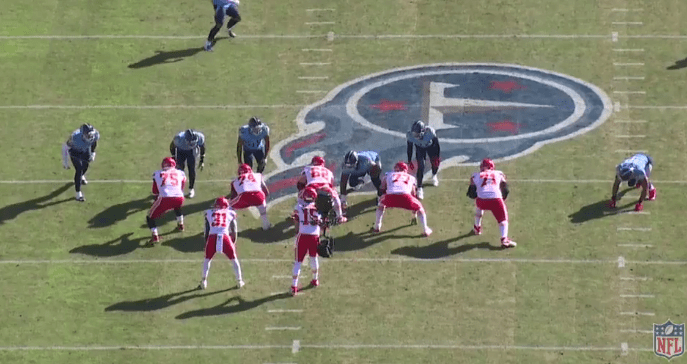
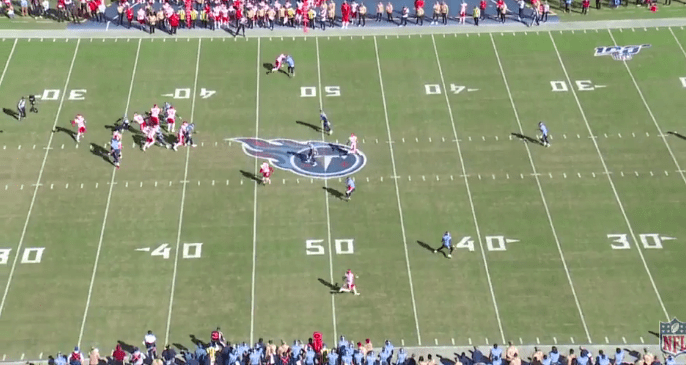
The final clip is from the regular season matchup between the Titans and Kansas City Chiefs from Week 10. The Titans show a 2 high look at the snap, and like the last clip, they walk up multiple defenders to the line of scrimmage to make the Chiefs slide their protection. On this play, they want the Chiefs to slide their protection to the 2 walked up defenders, so they can blitz Ryan and get a free rush at the open side B gap. The Titans will once again rotate their coverage to the strong side. The boundary safety will spin to the middle of the field and the field safety will drop down like he did in the last clip, playing 3 deep 3 under fire zone coverage.

2019 Chiefs @ Titans Week 10 © NFL GamePass

The Chiefs slide their protection from the right guard over to the left. The Running Backs job is to pick up #24 mugged over the right guard. The running back does a good job here because after Safety Kenny Vaccaro (#24) rushes inside, he turns his attention to Ryan blitzing late into the B gap. The other part to the rush is that #24 stunted inside with the defensive tackle to create another element to the blitz. The stunt worked, as Vaccaro caught the center off guard and got by him with speed. Unfortunately for him, Mahomes is the best QB in the NFL. He is able to fire a laser off of his back foot to complete the pass to receiver Tyreek Hill for a 1st down.

2019 Chiefs @ Titans Week 10 © NFL GamePass

The Titans had a great design, but the Chiefs were one step ahead because of the awareness of their running back, Darrell Williams. Mahomes was able to do what he does so often, which is make a play when the play already breaks down. As you can see from this 2 part study, simulated pressures are effective and it is easy to see why defenses at all levels are using them. It is the best way to stop modern offense because you don’t have to blitz to get a free rusher and you also can keep 6 or 7 guys in coverage, which is a necessity in today’s game to combat the spread passing attack and RPO’s.

Simulated Pressures Part 1

In the age of NFL, college and high school offenses blurred together, defenses are at a disadvantage more than ever. Defenses have to defend unique formations while also dealing with the tempo of offenses. Defenses need to be able to line up quick, match patterns and still account for every gap in the run game. In today’s world of football, offenses are dictating to the defense and the defense is just trying to survive.

One way defenses can shift the power in their favor is by blitzing. In today’s world of RPO’s, offenses have multiple answers for the defense in one play. Defenses can’t bring all out pressure because most of them do not have the talent to cover the offense’s receivers one on one. One way to combat offenses is by using simulated pressure. By showing blitz, and then dropping out of it, you make the offense have to respect the fact that you might be blitzing by forcing them to count the defenders you bluff as blitzes in their protection. Furthermore, you can then blitz a defender that wasn’t initially counted in the protection.

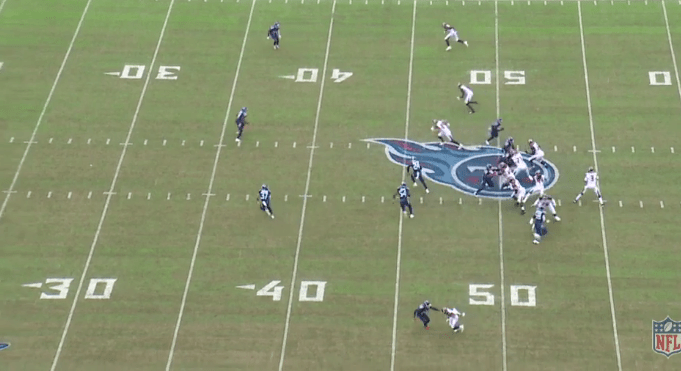
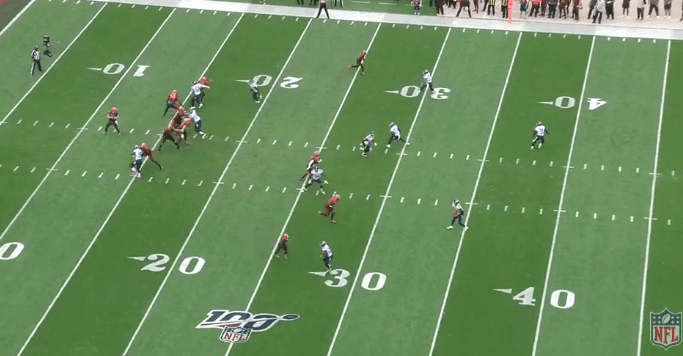
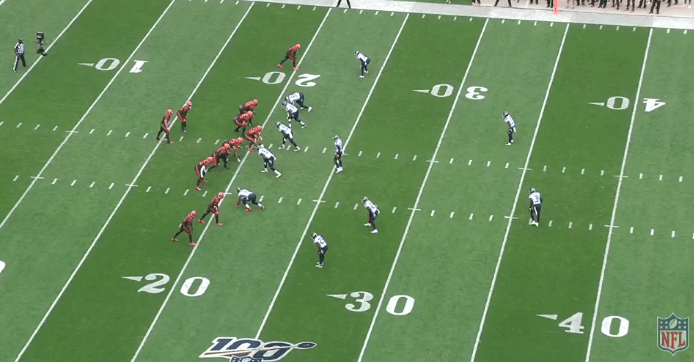
In part 1 of simulated pressures, we will take a look at a few simulated pressures that play 2 deep coverages behind it, so think Cover 2. One specific coordinator who does a great job using simulated pressure is former ravens defensive coordinator, and now former Titans defensive coordinator Dean Pees. While he retired immediately after the 2019 season, Pees has made al living giving offenses fits by attacking their protections with simulated pressures. Here is an example from Week 1 of the 2019 season against the Cleveland Browns.

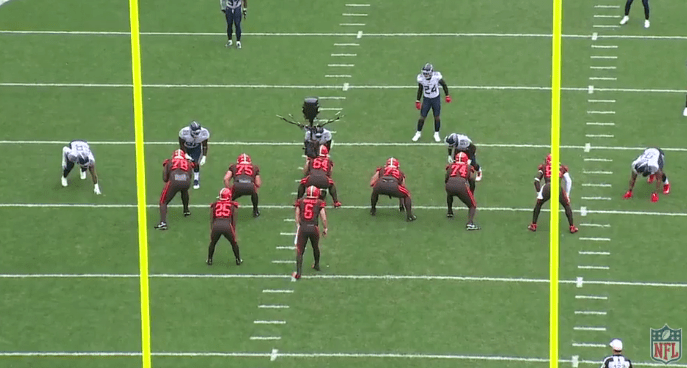
First, let’s see what happens before the snap from the wide and the tight copy. on third down and long, the browns line up in a 3×1 formation. The titans have 2 safeties high, but safety to the boundary is lower, which indicates that he will be dropping down.

2019 Week 1 Titans @ Browns © NFL GamePass

The titans have three defenders standing up at the line of scrimmage, with another safety (#24) who is a potential blitz threat. The safety’s threat to blitz makes the offensive line slide to the right, to be able to pick up the safety if he blitzes.

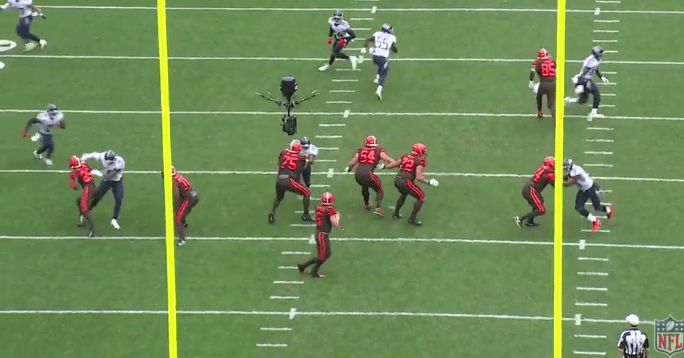
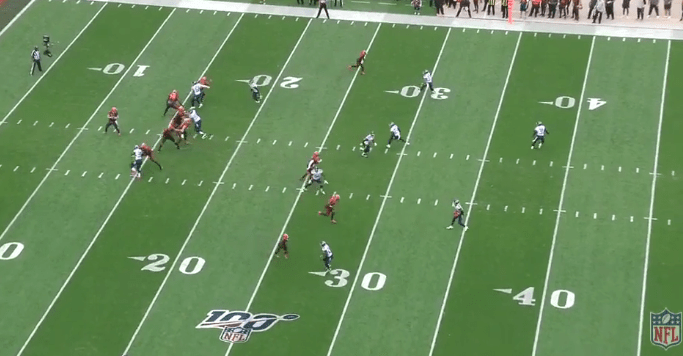
Post-snap, both linebackers drop into coverage, leaving two browns o-lineman with nobody to block (#64 & #72). The Titans blitz the outside corner from the boundary, who comes late, so the running back decides to go out into his route instead of picking him up. He doesn’t pick him up because the corner was not counted in the protection.

2019 Week 1 Titans @ Browns © NFL GamePass

The titans play cover 2, but rotate in a unique way. The nickel corner, who is aligned over the #2 receiver pre-snap drops back and plays a deep half to the field. and the initial field safety rotates to play the other deep half of the field to the boundary. The disguise in coverage forces the quarterback Baker Mayfield to hold the ball, allowing the titans to get the sack and the stop on third down.

The second example is from 2017 with Pees’ Ravens against the Green Bay Packers. ravens show a clear as day Cover 1 look pre-snap. They have one deep safety, with their corners pressed and aligned over each detached receiver. the Ravens also show an overload pressure look to the bottom of the screen.

2017 Ravens @ Packers Week 11 © NFL GamePass

After the ball is snapped, the Ravens drop out into a Cover 2 look. The nickel, who is initially playing over the #2 receiver to the top of the screen, turns and runs to play a deep half. Expecting pressure, the packers are only able to get 3 receivers into the route, with the Ravens dropping 6 defenders into coverage. From the tight shot, the ravens get an unblocked rusher, safety Eric Weddle, to pressure the quarterback.

The subtle disguises of Dean Pees are why his defenses are always among the best in the league and keep offensive coaches up late at night. While quite a few other teams run 2 deep sim pressures, such as the Houston Texans, Pees has been doing it effectively for years.

Sean McVay Rams’ Run Game

Since 2017, the Los Angeles Rams have been among the best offenses in the NFL. This is the result of the hiring of Sean McVay, who is the head coach but also calls plays on offense. McVay’s philosophy is to use the run game to set up the play-action passing game, which is how the rams gain chunk plays. The system is based on the wide zone running play. The wide zone is a concept that has been around the NFL for decades. The play is called wide zone because the running back sets his course for outside of the tight end, but he almost never runs that wide. The play is designed to cut back. McVay will motion receivers before and after the snap, as well as tight ends, to create space in the run game. A typical running play have a jet motion from a receiver to the left, the offense line block wide zone to the right, a tight end moving right to left and the running back initially running right but cutting back left. McVay wants the defense to move right with the flow of the running back, as well as the motion from the receiver. This allows him to run the ball to the left, because he has a numbers advantage to the left.

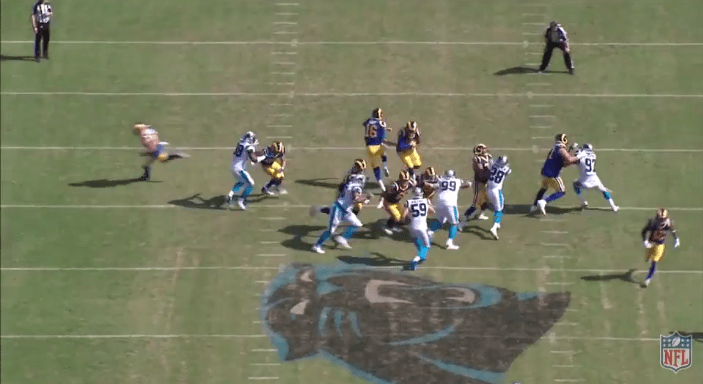
An example of the wide zone run cutting back was in week 1 of the 2019 season against the Carolina Panthers. In the play below, the Rams use the jet motion from the wide receiver to the offense’s right and run the play to the left. As you can see, the Panthers defense flows to the left leaving a huge cutback lane for Running back Todd Gurley. The Rams also send the tight end to cut off the backside edge defender. The motion from the receiver also prevents the backside safety from filling that C gap, where Gurley cuts back and runs.

2019 Rams @ Panthers Week 1 © NFLGamePass

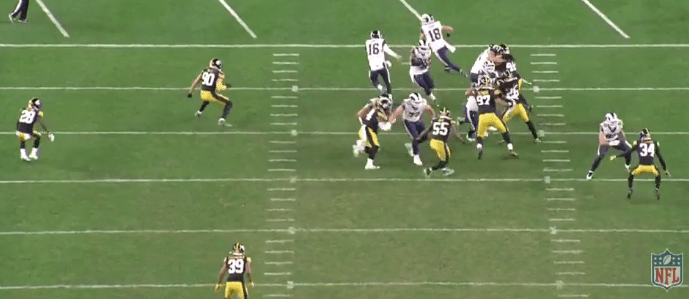
A similar play to the one above happened later in the 2019 season against the Pittsburgh Steelers. The only difference is that the Rams used a ghost motion by Receiver Cooper Kupp instead of jet motion. the difference is that ghost motion has the receiver motion behind the mesh point, and jet motion is in front. On the play below, the backside edge player, TJ Watt (#90) gets too far up the field because of the ghost motion. This leaves another big cutback lane for Gurley to run through.

2019 Rams @ Steelers Week 10 ©NFL GamePass

To keep the defense honest, the Rams will hand the ball off to the receiver in motion a few times a game. They vary which receiver gets the ball and will show it a variety of different ways.

Another staple play in the Rams’ run game is called Duo. The duo scheme is a man blocking scheme, meaning the offensive line blocks a man rather than an area. The Duo play is best against a 4 down front, that has a shade and a 3 technique. This front is ideal to run against because the offensive line has good angles to double team both the 3 technique and the shade up to the stack backers. When the Rams run Duo, they want the ball to go outside, the opposite of the wide zone.

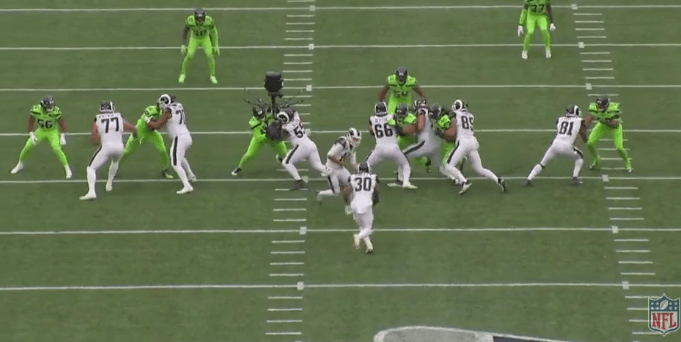
2019 Rams @ Seahawks Week 5 ©NFL GamePass

In the play above, the Seahawks’ defensive line stunts but the tight end (#89) is able to execute the down block on the defensive end spiking inside. Gurley will run the ball in between #89 and #81. The next defender for the Seahawks is about 10 yards deep, so Gurley picks up a solid gain. The Duo serves as a nice change up run for McVay to call.

Overall, the wide zone and duo are the two runs most often called by Sean McVay. The purpose of McVay’s run game is to create space to run the ball by deceiving defenders with motion. Thus opening up the play action pass game, which he makes look exactly the same as the run plays he calls. This makes the defense slower because they have to think, rather than simply read and react.

Design a site like this with WordPress.com
Get started