Defensive back is a tough position to play because you have to match up against the best athletes on the field. If you are in zone coverage, you have to be able to read routes in less than 3 seconds, which is about the average time it takes a quarterback to release the ball. If you are in man, you have to be able to cover the receiver, no matter what technique you are playing. There are so many different possible coverages a DB can be in, but there a lot fewer techniques.
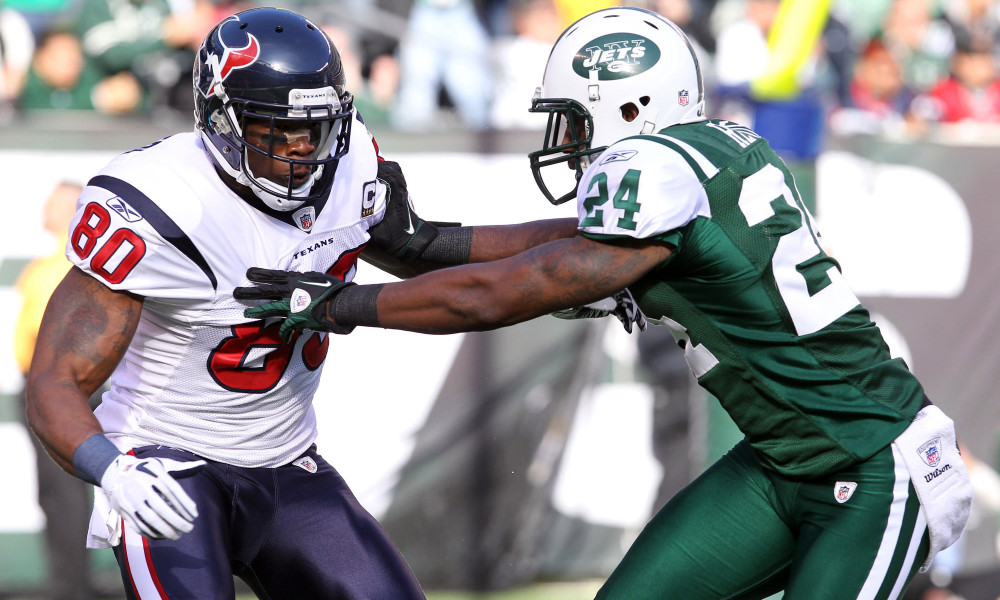
First, let’s talk about corners. When it comes to man coverage, a corner will play a few techniques. The most popular technique is press. In this alignment, the corner will jam the receiver with the hand opposite of the receiver’s release, often referred to as the off hand. If the corner jams with the same hand, he will lose his leverage. Leverage is something that the corner and receiver must understand. Every snap, the receiver has a plan to attack the corner, and the first thing a receiver will do is look at the corner’s leverage and depth.
If the coverage is 2 man, the corner will play with inside leverage. He will have help deep down the sideline from the deep safety to his side. Also, in 2 man, the corner will play a trail technique. The corner will let the receiver get behind him and stay in his hip pocket to undercut any route he runs. In Cover 1, the corner will play with outside leverage, because his help is inside, from a post safety. Sometimes, he will also have inside help from a robber or low hole player.
A popular technique is called inch technique. The corner will stay square to the receiver, giving ground. He is doing this to be able to cut off the receiver which ever way he goes. In the second tweet, Detroit Lions head coach Matt Patricia talks about how he teaches inch technique when he was the defensive coordinator of the Patriots.
A lot of coaches like to use the boards to prevent corners from crossing over their feet. Some coaches will have corners do drills with their hands behind their back when drilling mirror technique.
There is also mirror technique. This technique is exactly how it sounds. The corner will mirrors the receivers moves, never crossing over his feet. The goal of the corner is to make the receiver release around him. This takes time, and will allow the pass rush to get there. The corner will never turn and run. He will shuffle, or quickstep as some coaches call it, opening his hips at a 45 degree angle.
Sometimes, corners will play off man, and in this case they will play catch technique. The corner will catch the receiver, usually 5 yards, due to the no contact rule beyond 5 yards in the NFL. This coverage will be used in long yardage or in the red zone. Catch technique disrupts the timing of routes.
In zone coverage, safeties and corners will backpedal and break on the football, when playing quarters coverage. Quarters is called cover 4, but really turns into man coverage after route distribution. Heavy quarters teams need athletes at safety that can cover receivers down the field. In Cover 3, both outside corners are responsible for a deep 3rd of the field. They will turn and run with their eyes on the quarterback, as well as the #2 receiver. They have their eyes on #2 because if he runs down the seam, he has to be able to play it. If #1 goes vertical too, he has to midpoint the 2 routes. In zone coverage corners will read the QB front shoulder, not his eyes.
In conclusion, a corner must communicate on the field and focus on his technique to be successful. Most importantly, corners must have a short memory. They will get beat and even the best corner in the NFL gets beat. When you keep getting beat, it is easy to lose confidence. The NFL is a matchup league, and offenses will exploit corners who are struggling.
 Talkin Ball