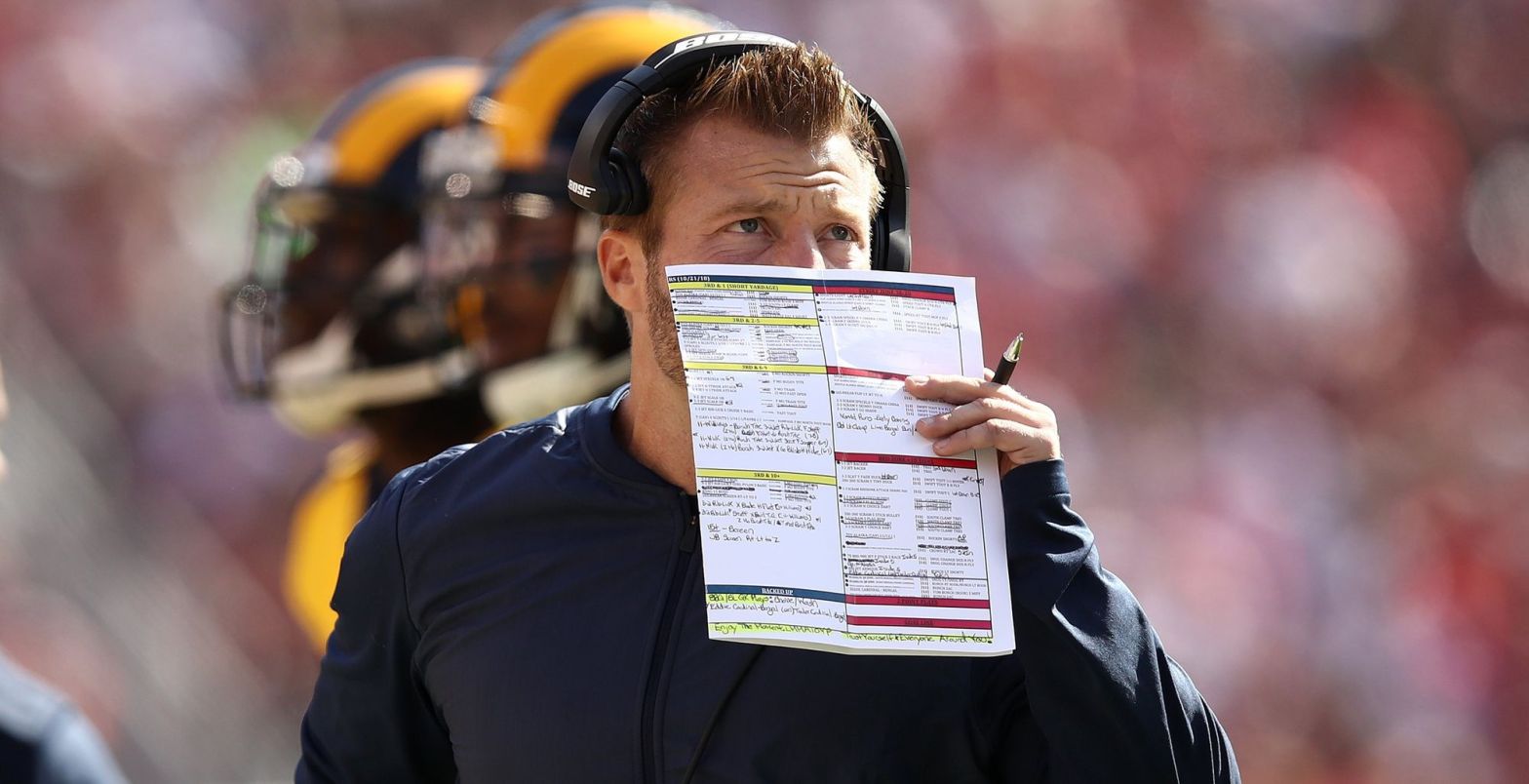
Since 2017, the Los Angeles Rams have been among the best offenses in the NFL. This is the result of the hiring of Sean McVay, who is the head coach but also calls plays on offense. McVay’s philosophy is to use the run game to set up the play-action passing game, which is how the rams gain chunk plays. The system is based on the wide zone running play. The wide zone is a concept that has been around the NFL for decades. The play is called wide zone because the running back sets his course for outside of the tight end, but he almost never runs that wide. The play is designed to cut back. McVay will motion receivers before and after the snap, as well as tight ends, to create space in the run game. A typical running play have a jet motion from a receiver to the left, the offense line block wide zone to the right, a tight end moving right to left and the running back initially running right but cutting back left. McVay wants the defense to move right with the flow of the running back, as well as the motion from the receiver. This allows him to run the ball to the left, because he has a numbers advantage to the left.
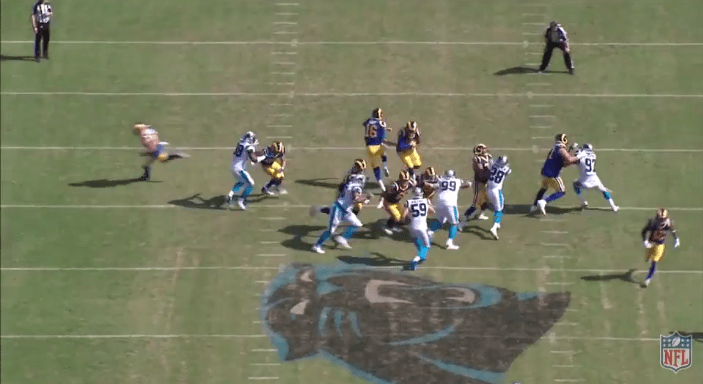
An example of the wide zone run cutting back was in week 1 of the 2019 season against the Carolina Panthers. In the play below, the Rams use the jet motion from the wide receiver to the offense’s right and run the play to the left. As you can see, the Panthers defense flows to the left leaving a huge cutback lane for Running back Todd Gurley. The Rams also send the tight end to cut off the backside edge defender. The motion from the receiver also prevents the backside safety from filling that C gap, where Gurley cuts back and runs.
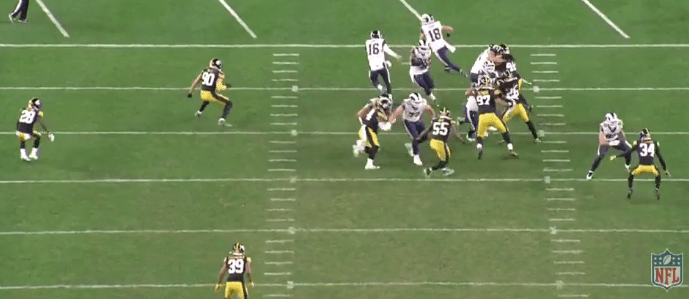
A similar play to the one above happened later in the 2019 season against the Pittsburgh Steelers. The only difference is that the Rams used a ghost motion by Receiver Cooper Kupp instead of jet motion. the difference is that ghost motion has the receiver motion behind the mesh point, and jet motion is in front. On the play below, the backside edge player, TJ Watt (#90) gets too far up the field because of the ghost motion. This leaves another big cutback lane for Gurley to run through.
To keep the defense honest, the Rams will hand the ball off to the receiver in motion a few times a game. They vary which receiver gets the ball and will show it a variety of different ways.
Another staple play in the Rams’ run game is called Duo. The duo scheme is a man blocking scheme, meaning the offensive line blocks a man rather than an area. The Duo play is best against a 4 down front, that has a shade and a 3 technique. This front is ideal to run against because the offensive line has good angles to double team both the 3 technique and the shade up to the stack backers. When the Rams run Duo, they want the ball to go outside, the opposite of the wide zone.
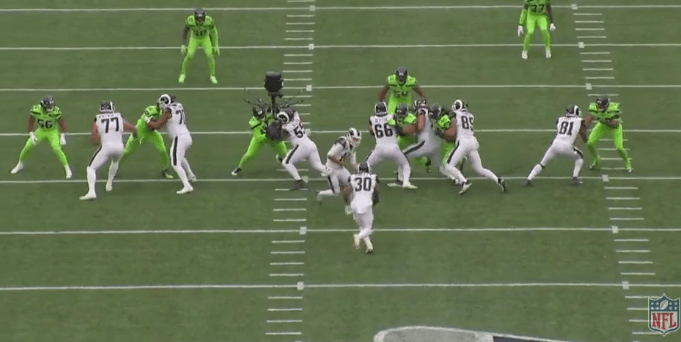
In the play above, the Seahawks’ defensive line stunts but the tight end (#89) is able to execute the down block on the defensive end spiking inside. Gurley will run the ball in between #89 and #81. The next defender for the Seahawks is about 10 yards deep, so Gurley picks up a solid gain. The Duo serves as a nice change up run for McVay to call.
Overall, the wide zone and duo are the two runs most often called by Sean McVay. The purpose of McVay’s run game is to create space to run the ball by deceiving defenders with motion. Thus opening up the play action pass game, which he makes look exactly the same as the run plays he calls. This makes the defense slower because they have to think, rather than simply read and react.
 Talkin Ball